
Lighter bottles since 2022
In 2022 we switched from 550 g to 410 g per bottle. That is the lightest standard bottle that still looks like wine. Less glass means less energy in production, less weight in transport, less material in disposal. Per year that is several tonnes of glass we don't produce and don't move.
Photovoltaics at four sites
Together 121 kW of photovoltaics and 75 kW of storage, spread across our buildings in Teesdorf:
- Press house, Badnerstraße 3: 60 kW photovoltaics, 50 kW storage
- Wine store, Hauptstraße 8: 25 kW photovoltaics, 25 kW storage
- Heuriger and wine shop, Wiener Neustädter Straße 75: 30 kW photovoltaics
- Barrique store, storage cellar and office, Badnerstraße 2: 6 kW photovoltaics
The electricity comes during the day, which is exactly when the cooling in the cellar is running. The batteries carry it into the evening.
Bottles and boxes returned
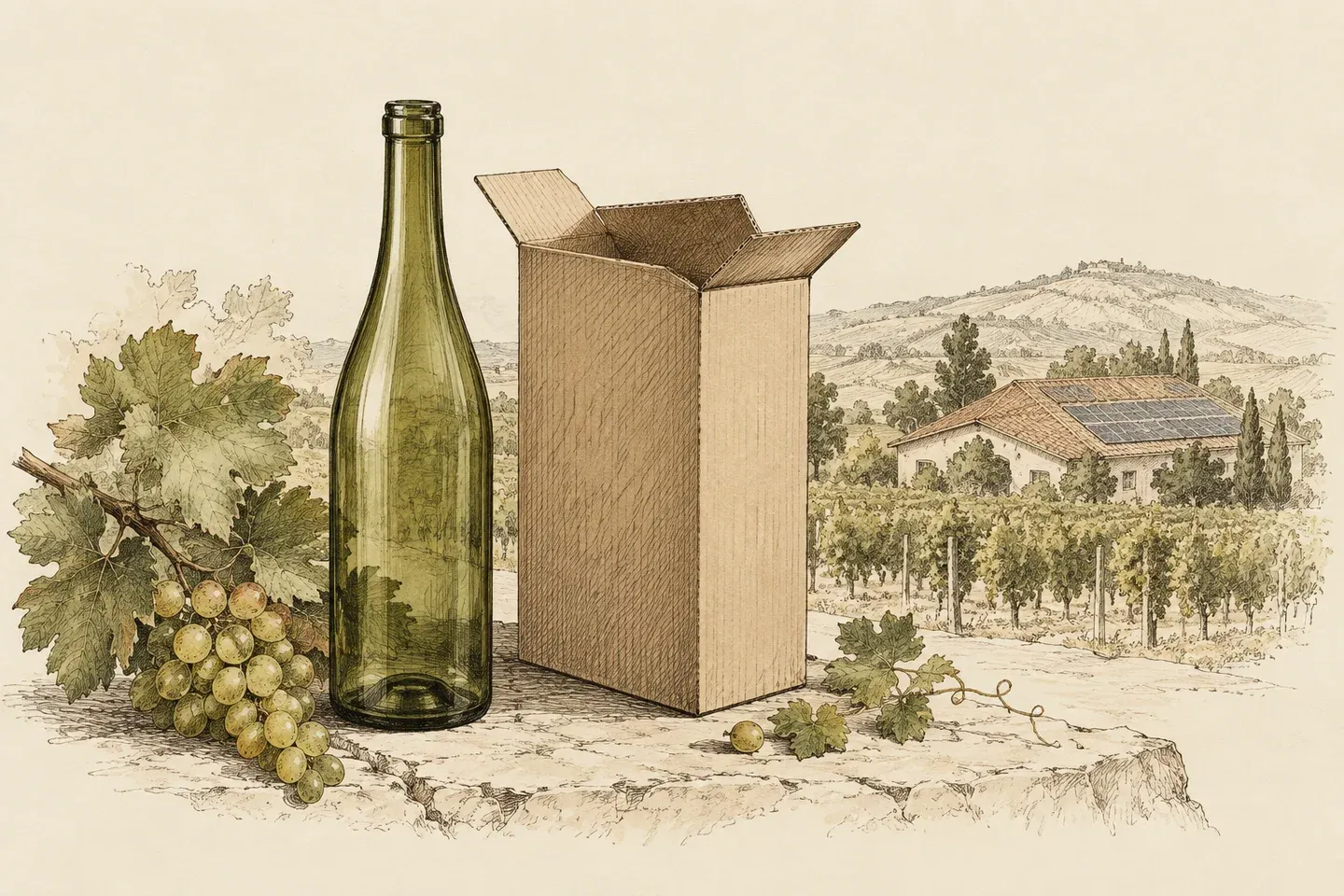
We take back empty bottles and boxes. There is no deposit or discount for it. The box is reused until it can't go on, usually three or four rounds. It only works in the region and for collection in person, but there it saves a few hundred boxes every year.
Screw cap instead of cork
We bottle our wines in dark lightweight glass with a screw cap. From 2003 onwards, for years, we bottled the same wines with both cork and screw cap and tasted them blind against each other. In about 95 out of 100 cases the screw cap won. Technically it is the best closure for us. Prestige does not come into it.
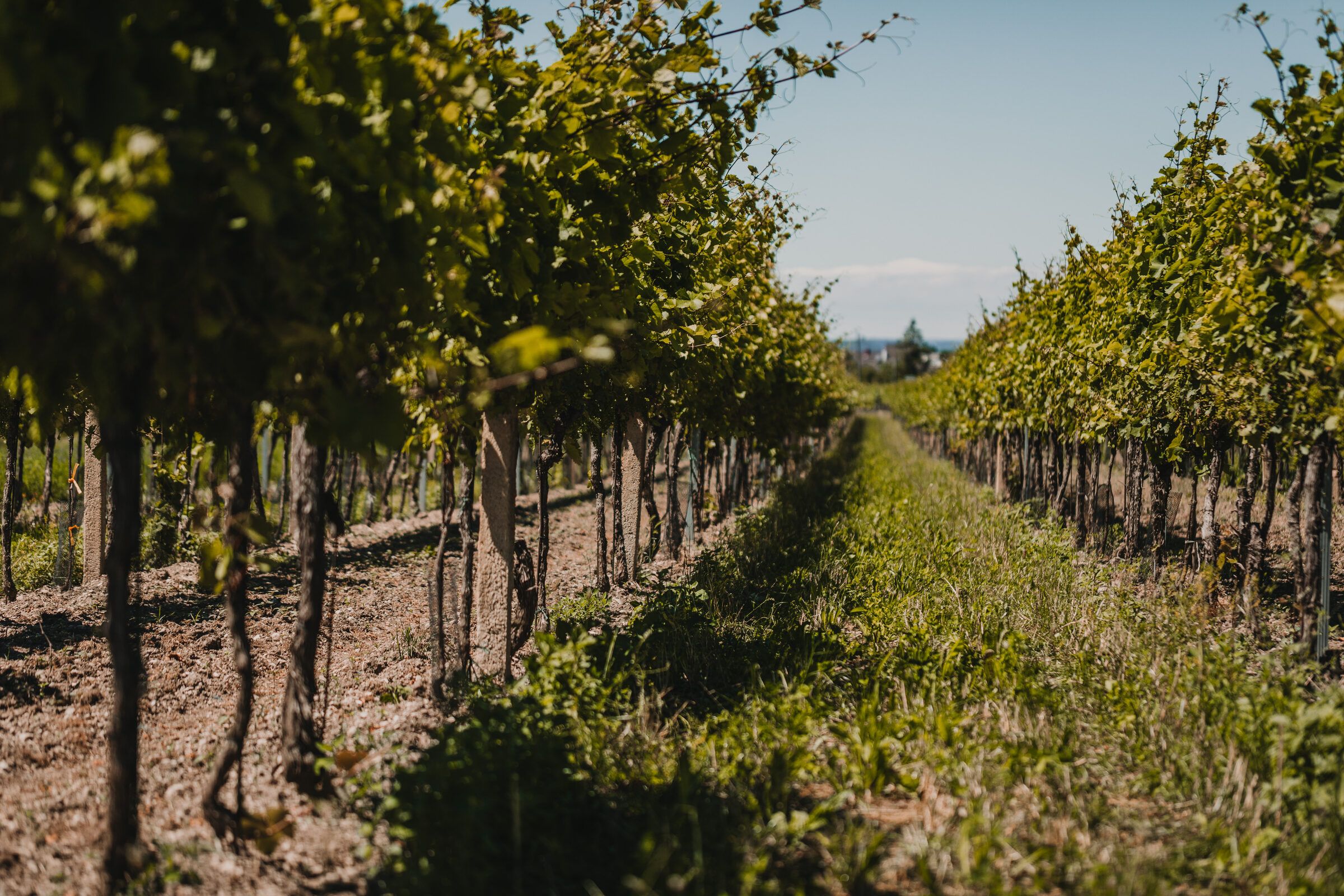
Green instead of artificial fertiliser
In our organic vineyards there is always something green between the vines. With its legumes the cover crop brings nitrogen into the soil and turns the dry gravel into ground where something flowers. How this works in detail is explained in the chapter Soil.
No carbon offsetting
We don't buy certificates. What we do, we do concretely. What we can't change, we don't dress up.
We do not dress up what we cannot change.